




By Michele Noonan
Selling a home in Hawks Landing requires a different approach than selling in most Plantation neighborhoods. With limited inventory, large custom homes, and a highly selective buyer pool, pricing strategy plays an outsized role in how quickly a home attracts serious interest.
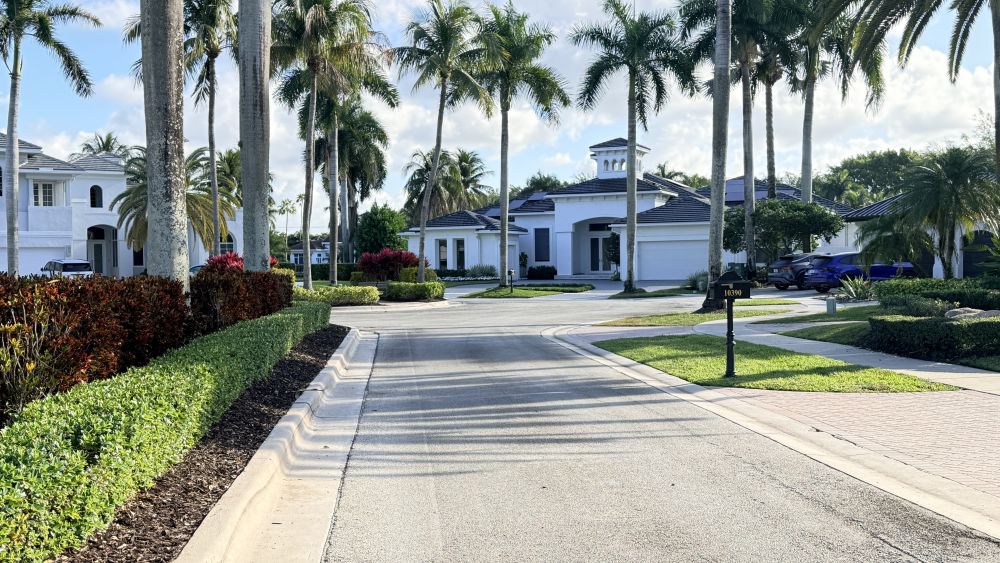
Hawks Landing Plantation FL is one of the most well-known gated communities in Plantation, recognized for its luxury homes, private amenities, and convenient location in western Broward County. Buyers comparing homes here often evaluate properties carefully and expect pricing to reflect current market conditions.
As a Plantation resident for more than 20 years and a local real estate professional, Michele Noonan has observed how the Hawks Landing real estate market evolves and how buyers compare homes within the community. Understanding these patterns helps sellers position their homes effectively when entering the market.
Why Hawks Landing Functions as a Separate Pricing Environment
Hawks Landing is Plantation’s most exclusive gated communities, defined by limited inventory, estate-scale homes, and a buyer pool that behaves very differently than the rest of the city. While many sellers instinctively look to Plantation-wide data when setting a price, that approach often leads to subtle but costly missteps in this neighborhood. Hawks Landing does not respond to averages, market headlines, or citywide momentum in predictable ways. Pricing decisions here are shaped by scarcity, buyer patience, and perception rather than volume. Sellers who fail to recognize this distinction often weaken their leverage before the market has a chance to respond.
In higher-turnover Plantation neighborhoods, pricing can be guided by recent sales volume and price-per-square-foot benchmarks. Hawks Landing does not offer that kind of statistical safety net. Inventory is thin, sales are infrequent, and each home is evaluated on its individual merits. This alone demands a more intentional and disciplined pricing strategy.
Why Plantation Averages Fail Inside Hawks Landing
Plantation-wide statistics blend neighborhoods with dramatically different housing stock, buyer motivations, and turnover rates. When sellers apply those averages to Hawks Landing, they assume the neighborhood will react the same way to pricing shifts as more uniform communities. It does not. The data simply lacks the resolution needed to reflect how buyers behave in a low-inventory, custom-home environment.
Homes in Hawks Landing were built over time, often by different builders and for different owners. Architectural execution, ceiling height, lot orientation, privacy, outdoor living design, renovation quality, and interior flow vary widely from property to property. In many years, there may be only a handful of sales that are even remotely comparable. That means a single transaction can distort averages and mislead sellers who rely too heavily on surface-level data.
Buyers are not choosing between dozens of similar homes. They are comparing two or three very specific options and ranking them based on overall livability and long-term satisfaction. Pricing must reflect how a home performs within that narrow competitive set, not how it fits into a blended Plantation metric.
The Micro-Market Reality Sellers Must Understand
Hawks Landing operates as a true micro-market, where outcomes are driven by relative positioning rather than broad market conditions. Sellers are not competing against the city of Plantation as a whole. They are competing against the few alternatives buyers are actively considering at that moment.
When pricing is based on general market assumptions instead of micro-positioning, sellers often misread buyer behavior. Showings may be limited, feedback may be vague, and interest may feel slower than expected. This is rarely because demand is absent. More often, buyers have quietly decided that the price does not align with where the home ranks among its peers.
This type of silent rejection is especially dangerous because it provides little warning. By the time sellers recognize the issue, early momentum has already been lost.
The Hidden Risk of Overpricing in a Low-Turnover Neighborhood
Overpricing in Hawks Landing rarely triggers aggressive low offers or obvious rejection. Buyers here tend to be patient, analytical, and financially capable. When a home feels overpriced, they do not negotiate. They wait.
This waiting behavior slowly erodes leverage. Without clear pushback, sellers may assume their pricing strategy is working and delay necessary adjustments. Meanwhile, buyers continue to observe the home from a distance, forming long-term impressions that are difficult to reset.
In Hawks Landing, first impressions matter more than in higher-volume markets. Once a home is mentally categorized as overpriced, even thoughtful price reductions may fail to restore urgency. Momentum, once lost, is difficult to regain.
Why Price Corrections Don’t Always Restore Momentum
In many Plantation neighborhoods, price corrections function as an effective reset. Inventory turns over more quickly, buyer pools are broader, and new buyers enter the market regularly. Hawks Landing does not benefit from those dynamics.
Because inventory is limited, each new listing immediately captures the attention of the active buyer pool. Opinions form quickly and tend to stick. A home that launches mispriced is often remembered as such, even after adjustments are made.
This is why launch pricing carries outsized importance in Hawks Landing. Sellers who rely on future corrections often discover that the damage was done early.
How Hawks Landing Buyers Interpret Pricing Signals
Hawks Landing buyers are not bargain hunters. They are evaluating long-term livability, privacy, and confidence in the decision. Many have the financial flexibility to stretch, but only when the home clearly earns that premium.
These buyers focus on perception more than mechanics. They consider how difficult the home would be to replace within the neighborhood, whether the lot and layout offer something meaningfully better than the alternatives, and whether the purchase will still feel like a smart decision years into ownership. Price is always evaluated in context.
When pricing feels disconnected from these factors, doubt is introduced. That doubt leads to filtering rather than negotiation. Correct pricing, by contrast, creates clarity and engagement.
Why “Testing the Market” Backfires in Hawks Landing
Some sellers believe they can start high and adjust later if needed. In Hawks Landing, this strategy often backfires. Because inventory is limited, each listing debut carries disproportionate weight.
A home that enters the market mispriced is frequently dismissed before any correction occurs. Buyers assume the seller is unrealistic or anchored to an inflated expectation. Even when adjustments are made, credibility can be difficult to regain.
In a low-turnover market, launch pricing is not a trial balloon. It is a statement of value and confidence.
What Actually Drives Value in a Custom-Home Community
In Hawks Landing, value is not dictated by averages or formulas. It is dictated by relative positioning within the neighborhood. Buyers are ranking homes, not calculating theoretical market value.
Privacy, lot placement, outdoor living quality, renovation execution, natural light, interior flow, and overall feel consistently outweigh minor differences in square footage or bedroom count. Buyers are focused on replacement value inside the community, not abstract metrics.
Homes priced in alignment with how buyers rank them generate confidence, engagement, and stronger negotiating dynamics. Homes priced ahead of their perceived position invite hesitation and delay.
The Correct Pricing Strategy for Hawks Landing Sellers
The correct approach is intentional, market-specific pricing built on precise micro-positioning from day one. This begins with identifying the exact homes buyers are comparing yours to and understanding how your property truly ranks.
Hawks Landing buyers are not evaluating expired listings or citywide averages. They are comparing real, current alternatives. Pricing must be anchored to decision clarity rather than emotion or aspiration.
When pricing is aligned with buyer perception, momentum builds quickly and leverage is protected. When pricing is misaligned, hesitation sets in early and becomes difficult to reverse.
Why Plantation Luxury Trends Don’t Always Translate
Luxury homes across Plantation behave differently depending on neighborhood structure. Areas with higher turnover or more uniform housing stock often respond predictably to market shifts. Hawks Landing is more insulated.
Its exclusivity limits the buyer pool, and buyers tend to be deliberate rather than reactive. Sellers who chase headlines or citywide trends risk mispricing. Those who focus on neighborhood-specific realities maintain control.
This distinction is what separates confident sellers from frustrated ones in the Plantation luxury market.
Conclusion
Pricing a home in Hawks Landing is not about following the market. It is about understanding buyer behavior, protecting leverage, and positioning the home correctly from the very beginning. Sellers who rely on Plantation averages often weaken their position without realizing it.
Those who adopt a micro-market strategy preserve value, attract stronger interest, and move through the sale with confidence. Because Hawks Landing operates differently from the rest of Plantation, pricing decisions here require precision rather than generalization.
For a deeper breakdown of how buyers make side-by-side judgments inside the neighborhood, refer to the earlier Hawks Landing Seller Series article, How Buyers Compare Homes in Hawks Landing: What Actually Determines Value in Plantation’s Most Exclusive Community, which expands on the buyer evaluation framework referenced here.